Pamplemoose·Games
01 / 14
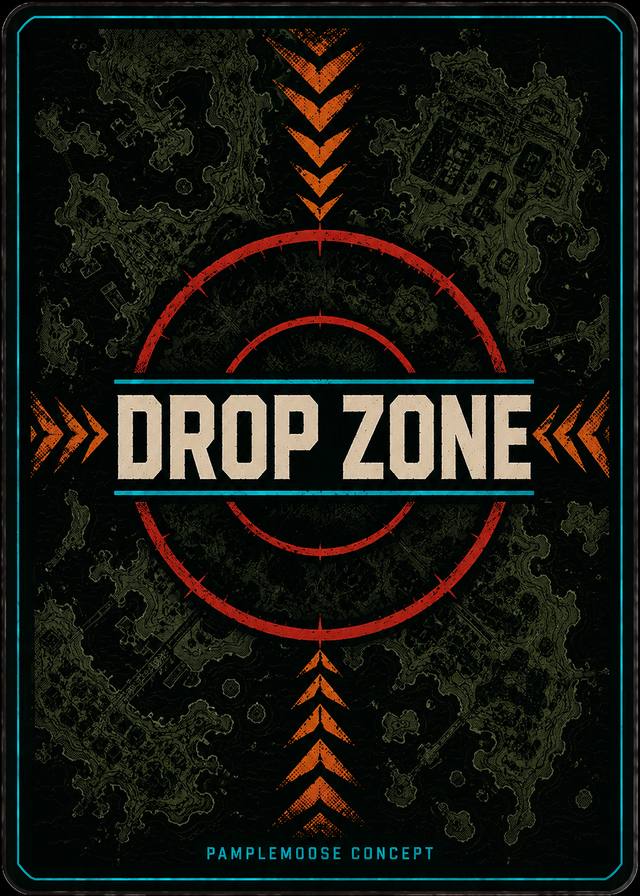
Drop Zone card back
Pamplemoose Games × Garena · Concept Pitch

Free Fire
Drop Zone

A 3v3 squad board game where the drop is the mechanic, not the theme.

Working title · 2 or 6 players · 30 to 45 minutes · Ages 12+
A concept by Pamplemoose Games
The insight

Your players already build decks.
They call them loadouts.

Every Free Fire match starts the same way. Pick a character, stack passive skills pulled from three others, then argue with your squad about whether the combo holds up. Sixty-seven characters deep, your community has been doing deck construction for years without ever calling it that.

So this game does not teach them a new system. It hands them the one they already know, in a form they can put on a table.

Derived from Free Fire · never painted onto it
What it is

Two squads of three. One island.
One shrinking circle.

1

Draft in the plane. Draw three ability cards, keep one for a character, pass the other two to the opposing squad.

2

Pull the chute whenever you want. The first squad out of the plane lands first and claims their landmark first.

3

Land, loot and fight. Every landmark on the board holds its own deck of weapons, items and rare abilities.

4

The zone closes every round. Tiles go dark, their loot burns with them, and the island keeps getting smaller.

5

Last squad standing calls it. Booyah.

Kelly character card
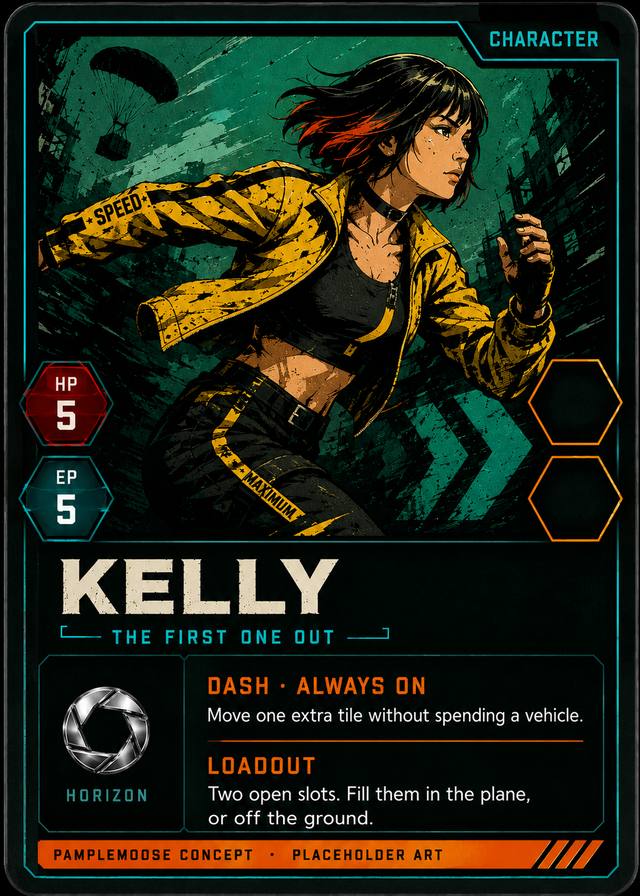
Two empty sockets · the loadout you did not stay to fill
The signature mechanic

Pull the Chute.

Every draft round buys you one more ability and costs you a worse landing. Drop order is simply the order in which squads stopped drafting. Jump early with empty slots and you land first on an untouched landmark. Stay in for one more card and you land into a map somebody else already picked over.

Two ways to fill a slot

One economy, two speeds

The plane is slow and certain. The ground is fast and random. Both spend into the same six slots.

What you refuse stays out there

The pass has teeth

Your opponent keeps one of the two you hand over and buries the other face down on a landmark of their choosing.

The board

Eight tiles. Laid out fresh every game.
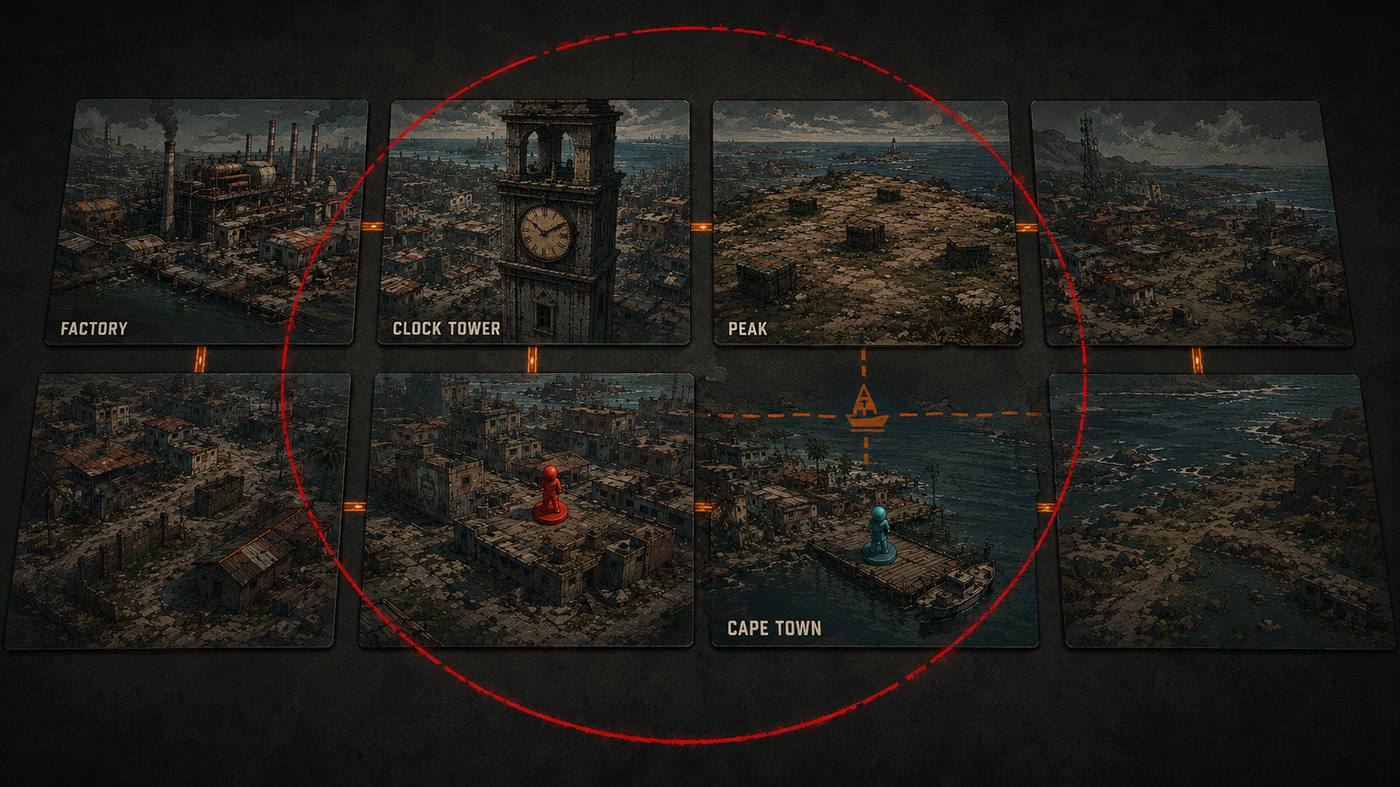
Drop Zone board layout

Landmarks connect by routes, one of them across water. The red circle closes in as the Zone deck runs down, tiles go dark, and their loot burns with them. Free Fire players already build their own maps in Craftland, so a board that rearranges is something your audience does natively.

The tiles

Every landmark plays differently.

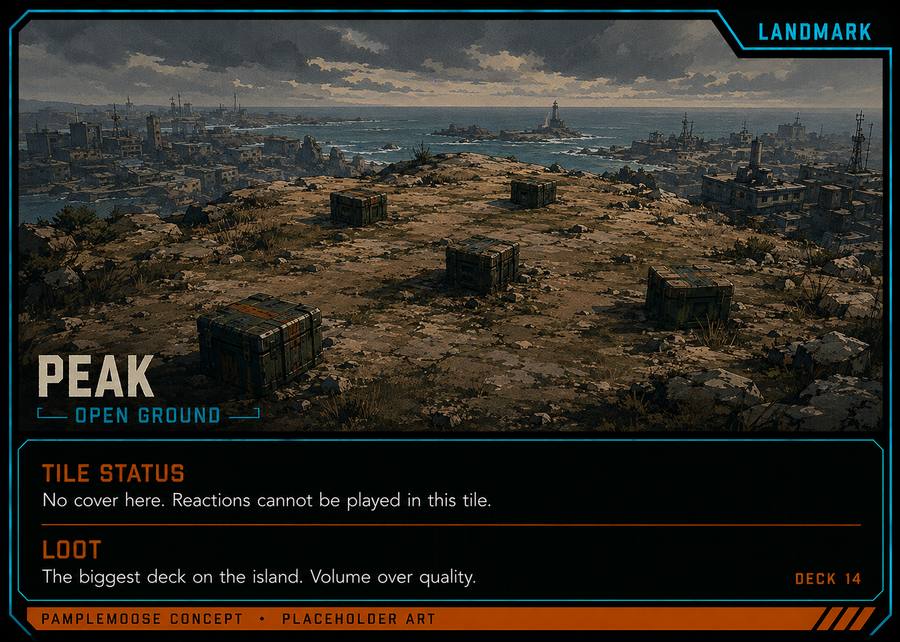
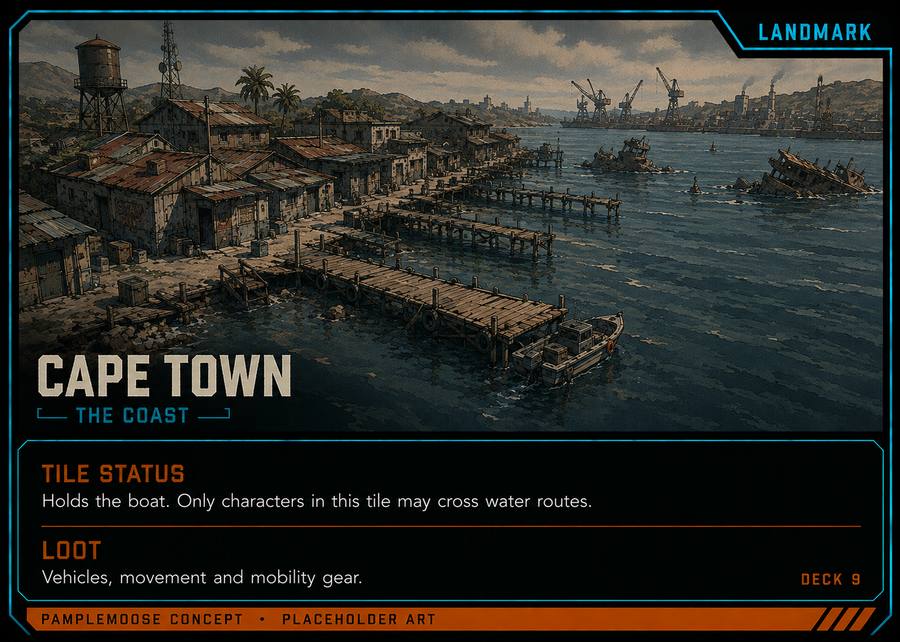
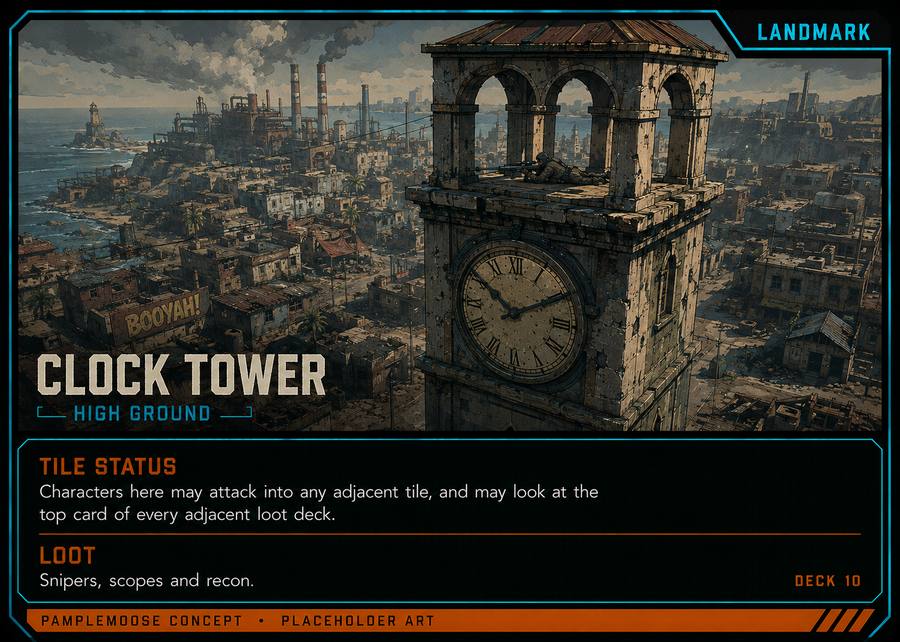
Each tile carries its own status and its own loot deck, so choosing where to land is a real decision before a single card is drawn.
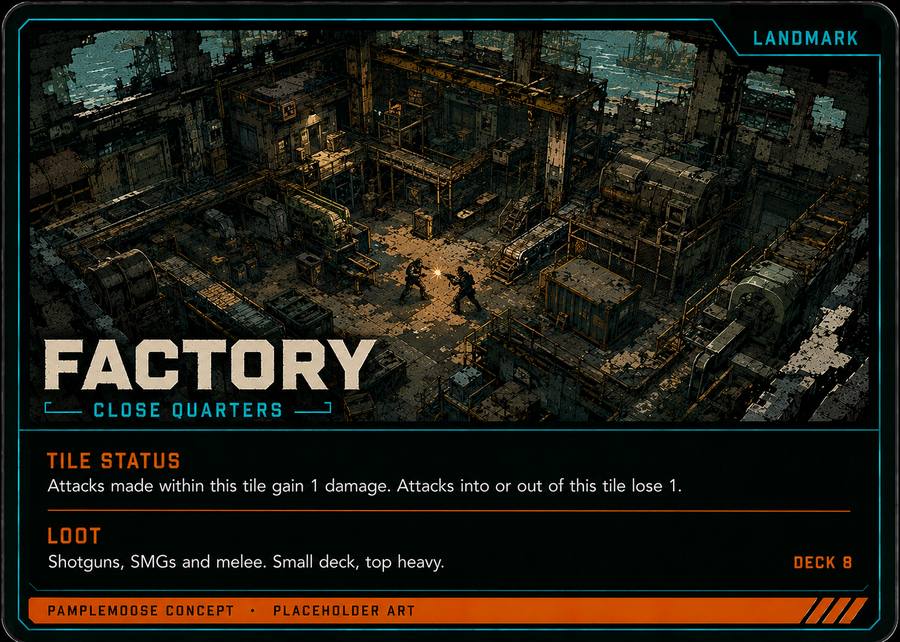
Factory landmark
Clock Tower landmark
Peak landmark
Cape Town landmark
The squad

Three characters. Six open slots.

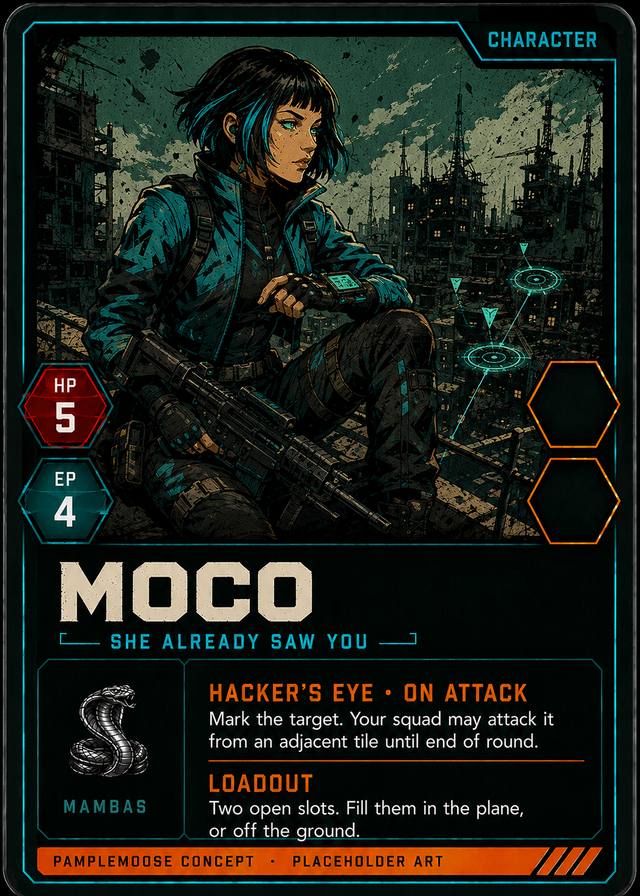
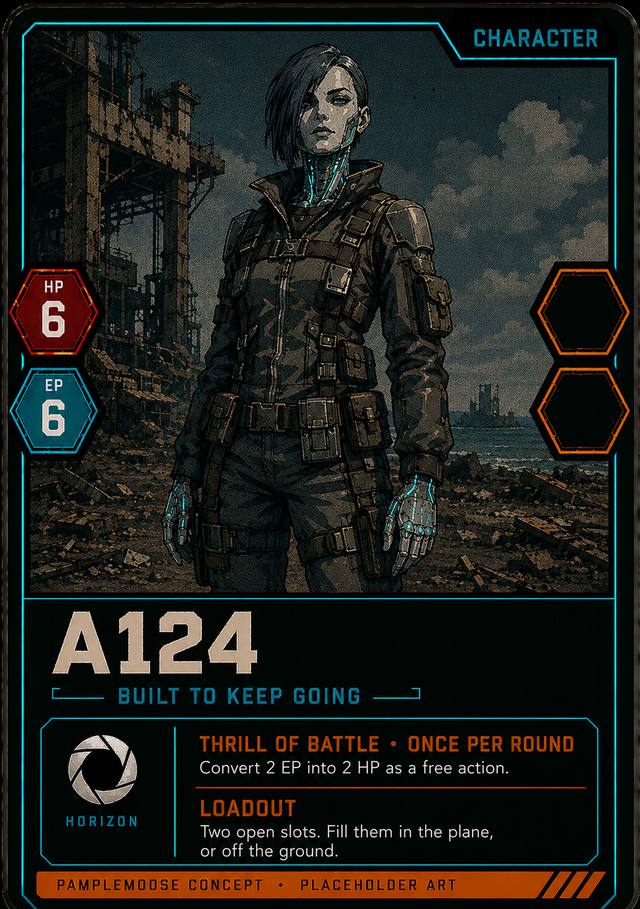
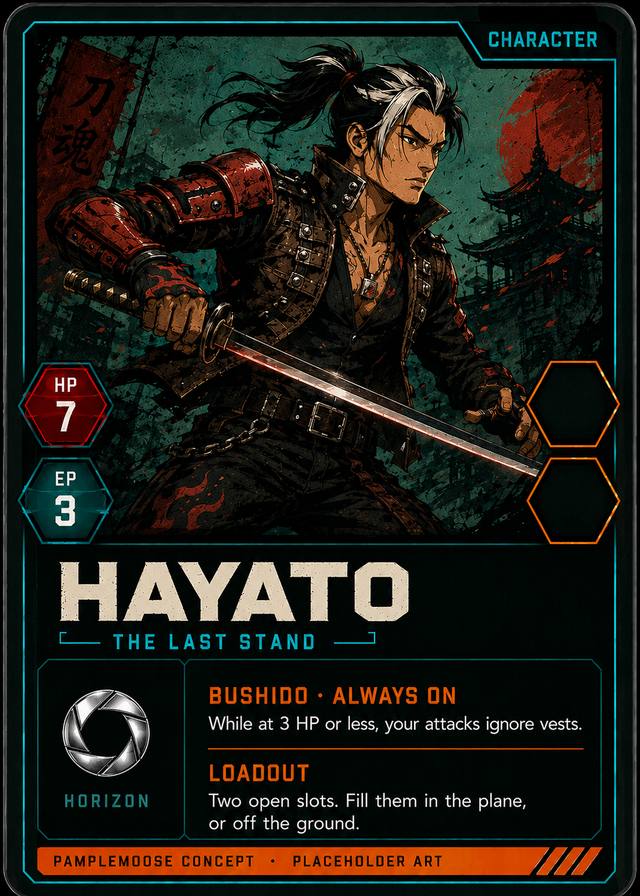
Every character carries a printed signature skill that never changes, plus two sockets you fill in the plane or off the ground. Faction sits on the card, because Horizon and the Mambas are already in your fiction.
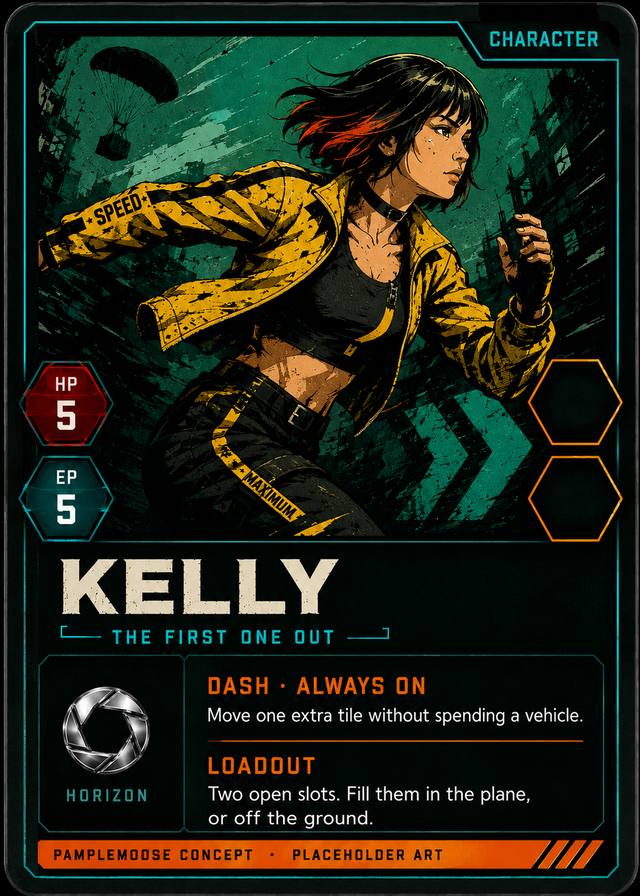
Kelly
Hayato
Moco
A124
Placeholder art only. Final art would be commissioned. AI never touches the game design. Alok and Chrono are deliberately absent; see the following slides.
The cards

Abilities, gear and the clock.

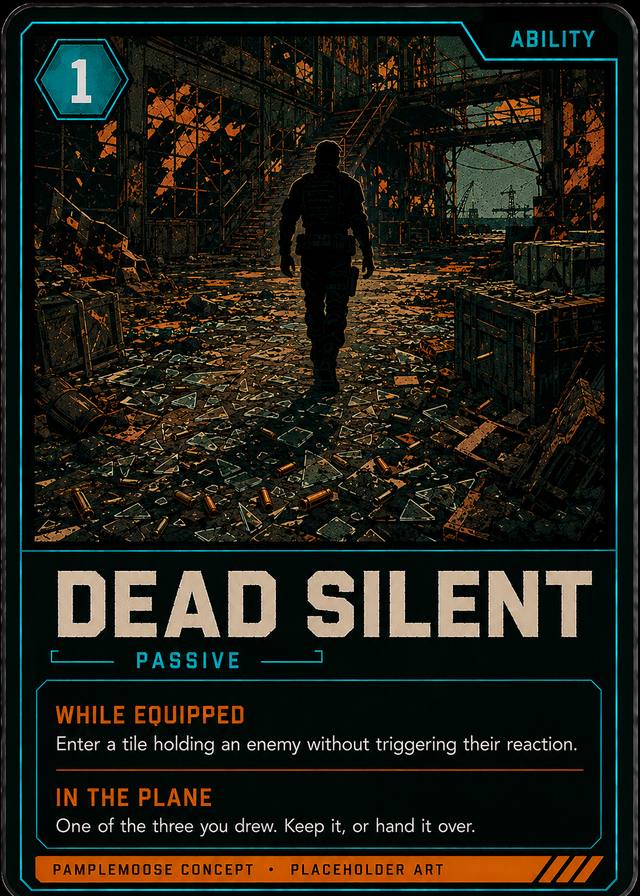
Dead Silent ability
Ability · drafted in the plane
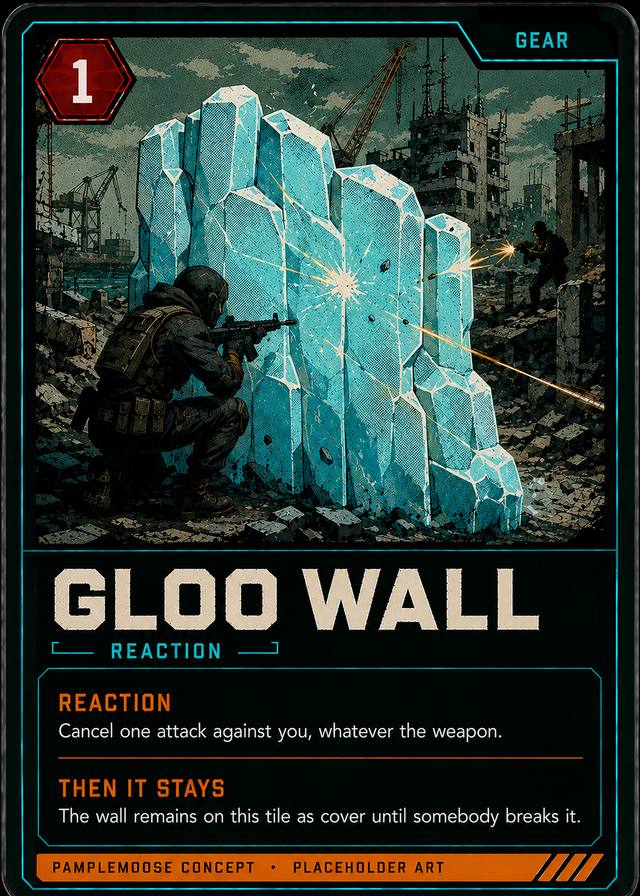
Gloo Wall gear
Gear · found on the ground
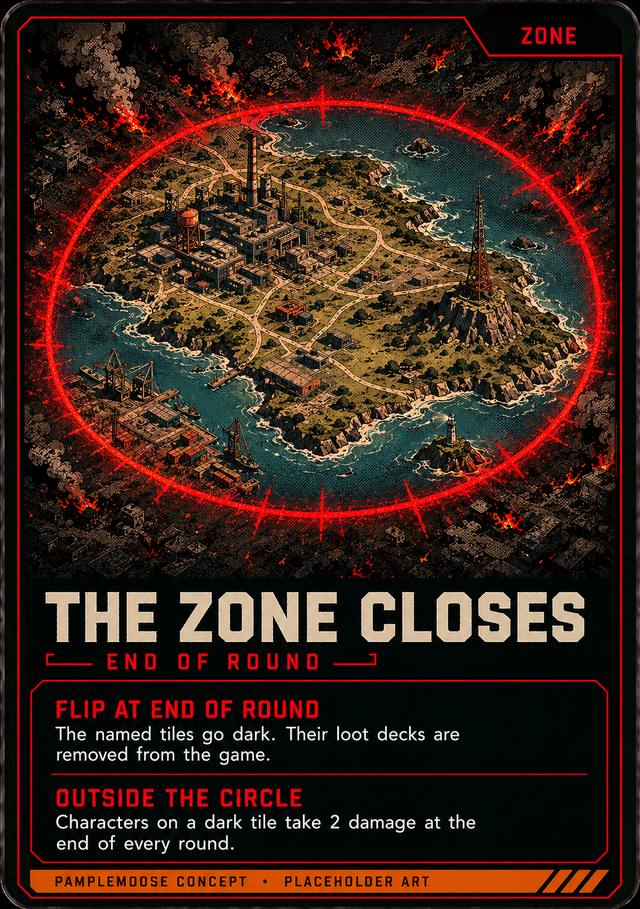
The Zone Closes
Zone · the clock, in red

The Gloo Wall gets the strongest card in the set on purpose. It is the most recognizable object in Free Fire, it already has counterplay you built, and it belongs on a table.

Who it is for

Built for the players you actually have.

Free Fire is a Global South franchise. Brazil alone is roughly a quarter of in-app spend, and Indonesia, Thailand, Vietnam, Pakistan and MENA carry most of the rest. Those players are young, mobile first, and price sensitive. The Free Fire card product that already works in that market sells through convenience stores at impulse price.

Which means the format is a decision we would rather make with you than around you. The engine holds at any of these. The box does not.

Impulse set · convenience channel Mass retail box · toy aisle Specialty box · hobby channel
Why now

Daybreak lands in Spring 2027.

Spring 2027
Free Fire: Daybreak premieres worldwide
33.5%
Garena revenue growth, Q2 2026 year over year
1.3B
Lifetime downloads across Free Fire and MAX
Zero
Free Fire board games in market anywhere
At Licensing Expo you told consumer products partners to come talk about the anime, the expanding universe, and where Free Fire goes physical. This is us walking through that door with something already built. Garena, describing what it is looking for

A board game takes roughly that long to make properly. Starting now means it exists when the show does.

The honest part

Three things we would rather say up front.

You already have cards. A Free Fire trading card game shipped through Indomaret in 2024, and the PMI collection with trading cards is landing this month. We are not going to tell you the category is empty. What has not been built is a game with a real engine underneath it. Free Fire has cards to collect. It does not yet have a game to play.
A board costs more than a deck. Eight tiles and five card systems will not reach convenience store pricing. There are ways down, including printing the map inside the box lid or assembling the map out of the landmark cards themselves. Which one is right depends on the channel you want, and that is your call before it is ours.
We left Alok and Chrono out on purpose. They are your two most famous characters and both are built on real people. Those likenesses are a separate right from the Free Fire license, and we would rather not design around something you might not be able to grant.
Where it goes

One island is a game.
Six is a franchise.

The engine never changes. The board does. Every Free Fire map becomes an eight tile expansion with its own landmark statuses and its own loot decks, which is also how a printed product keeps pace with a live service one.

Bermuda · base set Purgatory Kalahari Alpine NeXTerra Solara

NeXTerra carries the Horizon logo, so it is the natural home for the rare abilities.

Ownership

You own Free Fire.
We design it.

Garena keeps the property and owns the finished game outright. We are paid to design it. Everything in here is built out of your systems, so there is nothing to untangle later.

GarenaOwns the IP, the characters, the maps and the finished game
GarenaApproves the roster, the landmarks and every line of card text
UsDesign, development, balance and the rulebook
UsArt direction and commissioned illustration, to your brand standards

We are a two designer studio out of Madison, Wisconsin. HAVOC: Gen Zero, the card game we designed, funded on Kickstarter in under thirty minutes. Since then we have built card games out of comics, sports leagues, candy brands and entertainment properties, and the method never changes. We find what a property already does, and we make that the rule.

Next step

If this is worth twenty minutes,
we will walk you through it.

Happy to take it to your team, answer whatever this raises, or rework the direction entirely if the format is wrong for where Free Fire is heading. And if it is not your thing, that is a fair answer and no hard feelings on our end.

Zack Howe & Cole Beardsley · Pamplemoose Games · zack@pamplemoosegames.com
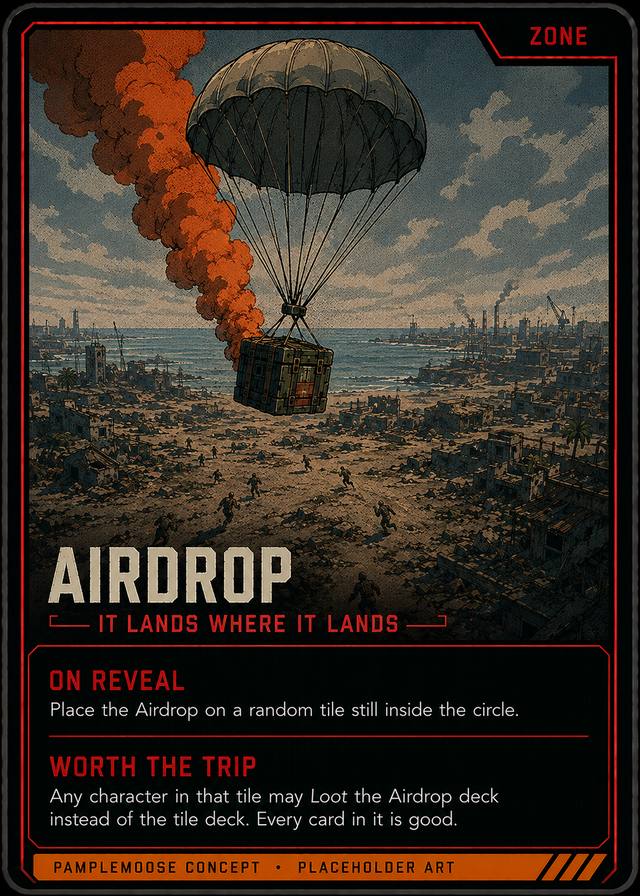
Airdrop card

Concept pitch prepared by Pamplemoose Games LLC for Garena. All Garena and Free Fire brand assets, names, characters, locations and imagery appear solely to demonstrate this concept and remain the property of their owners. Game mechanics and designs are original work of Pamplemoose Games LLC. Placeholder art only; final art would be commissioned. AI never touches the game design. Not for distribution.